Anúncios
Ever left a meeting certain you’d remember every task, just to realize later you missed a key detail? This is where AI meeting transcriptions shift the balance from memory to certainty.
Capturing meetings in text empowers teams to revisit decisions, clarify next steps, and share context effortlessly. As projects grow more complex, having a searchable, accurate transcript isn’t just handy—it’s a genuine timesaver for everyone involved.
Let’s dig into what AI meeting transcriptions can do, the tools powering them, and how you can use them to keep every meeting actionable and clear long after the call ends.
Find the right fit for seamless meeting transcriptions
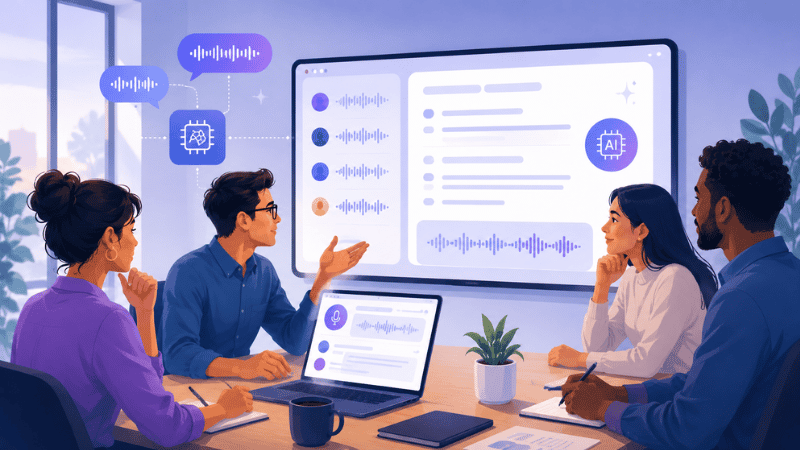
The right AI meeting transcription tool fits your workflow and delivers text you can actually use. Begin with what you need most: speed, speaker identification, privacy, or easy exports.
It’s like choosing a note-taking buddy. Some AI tools excel at quick after-meeting summaries, while others capture long technical calls with near-verbatim detail and speaker labeling. Powerful choices await.
Workflow compatibility means less hassle
Check if an AI meeting transcription tool integrates directly with your calendar or video platform. This means you won’t juggle extra logins or upload steps—recordings route automatically for transcription.
Some tools simply “join” your call as a silent bot. Others require you to record and upload manually. Opt for what saves time from the start.
Much like you wouldn’t force a bicycle into a car lane, pick the tool that naturally fits your existing routes. Integration matters for daily efficiency.
Accuracy varies across platforms
Don’t expect every AI meeting transcription solution to handle jargon, speaker accents, or background noise equally. Test with a snippet and compare results.
If your calls feature industry-specific lingo or soft-spoken team members, prioritize services that let you train models or adjust accuracy settings. You’ll get clearer transcripts for your context.
Use audio samples your team actually records for a real-world fit. Compare the same recording across options for targeted results.
| Tool Name | Main Integration | Speaker Labels | Takeaway for Readers |
|---|---|---|---|
| Otter.ai | Zoom, Google Meet | Yes | Automate transcription and labeling in real time; ideal for shared, recurring meetings |
| Sonix | Manual upload | Yes | Flexible uploads for offline meetings; strong multi-language support |
| Rev AI | Multiple platforms | No | Best for privacy and turnaround on smaller meetings |
| Fireflies.ai | Google Calendar, Zoom | Yes | Bot auto-joins calls; timely for quick follow-ups with searchable text |
| Descript | Direct exports | Yes | Edit audio and transcripts together; creative teams benefit |
Turn spoken content into searchable records instantly
Transforming spoken words into structured, searchable AI meeting transcriptions saves you from the scramble for notes. These features make your archive actionable and quick to review long after the meeting ends.
Use these tools to create living minutes: everything said is now at your fingertips and easy to share or revisit as action items arise throughout your project.
Export formats let you share and reuse
Transcripts come in different file formats—PDF, DOCX, plain text, or integrations with project management tools. Choose formats that fit your team’s workflow, so distributing next steps and findings is immediate, not another chore.
- Export as DOCX for easy editing—perfect for teams who annotate or revise after every meeting
- Send transcripts to Google Drive instantly—great for teams that collaborate and search within a shared knowledge base
- Sync with Slack or Asana—turn parts of the transcript into tasks without leaving your routine comms software
- Generate SRT files—timing helps when you’re reusing transcripts for training or subtitles
- Create shareable links—easy for stakeholders to review meetings even if they missed the call
Timely exports mean quick sharing—no more waiting days for action items to land in the right hands. You get immediate follow-through.
Speaker identification reduces confusion
Knowing who said what saves arguments later. Strong AI meeting transcription tools tag speakers so you can see decisions, ask clear follow-up questions, or assign tasks based on real dialogue—not guesswork.
- Choose tools that let you pre-load regular speaker names—reduces manual correction later
- Use color-coded text for each participant—scan the document and spot contributions easily
- Search by speaker to track commitments—find every time a team member was assigned a deliverable
- Review group discussions—see overlapping dialogue broken out by speaker, not just a wall of text
- Split transcripts by session or topic—helpful for follow-up in longer, multi-part meetings
The best AI meeting transcriptions make accountability simple and help resolve confusion before it starts.
Troubleshoot common pitfalls when relying on automation
Expect better outcomes by addressing the main drawbacks of AI meeting transcriptions head-on. With a few tweaks, you avoid surprises and keep your workflow robust and reliable.
Think of these adjustments like calibrating your GPS—occasional checks mean reaching your destination without extra detours or missing information along the way.
Check for accuracy each time
Upload a 60-second file and review transcription quality. Fix misheard jargon or accents by adding terms to a custom dictionary or glossary when possible. Spot-check and correct before circulating transcripts to others.
If you’re quoting critical numbers or instructions, verify these were captured accurately. Even top-tier AI meeting transcription models sometimes drop numbers or unique phrases. Keep a “double-check” step in your process for important meetings.
Build a quick review checklist: scan for skipped speakers, technical errors, or garbled sentences. Consistent reviews keep transcripts useful and reduce confusion for the whole team.
Balance privacy with convenience
Some industries demand secure handling of AI meeting transcriptions, so confirm your provider’s encryption and storage policies. Share with intent—limit file access to only those needed. Use password protections if offered.
Test auto-deletion settings if you want transcripts erased after a set period. Privacy is as much about what you keep as what you choose not to store. Put these settings in place before you need them.
Explain these measures to your team so everyone understands how sensitive information is handled. Clarity builds trust in your transcription process and keeps compliance simple.
Automate meeting follow-up and drive project clarity
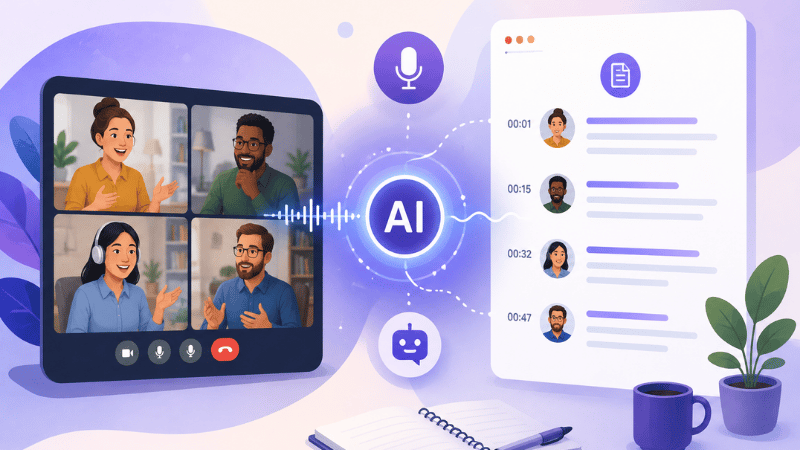
When you leverage AI meeting transcriptions, you can automate next steps, assign tasks, and share decisions with less friction. That turns every meeting from a dead-end to a launch pad for your team’s objectives.
Add structure to your outcomes immediately after a call ends—real-time transcripts let you act fast while discussions are fresh in mind, so projects stay on the rails.
Turn conversations into task lists
Use transcript highlights to generate actionable checklists. Teams can identify unresolved topics, review who was responsible for what, and move straight from talking to doing—no extra meeting just to recap.
Highlight each action item within the transcript. Tools that link back to the original snippet provide full context, so nobody wonders what was missed or misunderstood later.
It’s like turning a chatty group dinner into a menu—everyone leaves knowing exactly what they’ll bring next time. No ambiguity or missed assignments.
Build knowledge bases automatically
Archive AI meeting transcriptions in a central folder organized by date or topic. Search these records to watch a project’s evolution or on-board new members with proven answers and context.
Integrate transcripts with wiki software. Over time, your company’s expertise lives in a searchable, evolving reference—not scattered notes or memory alone.
Real knowledge bases emerge when every decision and detail is captured in context. That turns team discussions into sustainable assets your entire organization can use.
Personalize AI settings for better results every week
Personalizing your AI meeting transcription settings yields more useful output over time. Tweak vocabulary, speaker names, and export templates to match your specific team routines for improved reliability week after week.
Like training a coffee barista to remember your regular order, you’ll waste less time correcting transcripts, and your team benefits from tailored, actionable records.
Custom dictionaries empower industry teams
Upload a glossary of your company’s product names or internal jargon so that AI meeting transcriptions don’t stumble over specialized language. Your transcripts will require fewer corrections and serve as a more accurate reference point.
If your terminology changes, update your list promptly. This avoids errors in future meetings and sets a new standard for your documentation process without hassle.
Teams in medical, engineering, or legal fields especially benefit from proactive customization—complex terms won’t get lost in translation.
Adjust speaker recognition over time
As team members join or leave, update voice profiles so AI meeting transcription tools quickly adapt. Some systems let you “train” the algorithm with sample recordings for better speaker distinction at every session.
Correct any recurring errors—maybe someone’s accent triggers a mix-up, or a regular guest is missed. Feedback loops keep accuracy high and frustration low for repeat users.
This hands-on approach ensures meetings remain searchable by speaker, even as your roster changes season to season. That’s long-term reliability in action.
Anticipate impact: Broader adoption reshapes workplace habits
Broad usage of AI meeting transcriptions lets organizations shift from reactive note-taking to proactive, shared understanding. New habits emerge—teams prepare knowing every word is captured, and focus turns to moving projects forward, not reconstructing past conversations.
Groups with regular meetings develop rituals—reviewing AI meeting transcriptions before follow-ups or using them for ongoing process improvement. Written records shape behavior over time and align expectations for all involved.
Onboard new members with trustworthy records
Rather than starting from scratch, new hires can scan archives of AI meeting transcriptions to catch up at their own pace. They see real language, team dynamics, and who drives what.
Assigning review of previous transcripts accelerates ramp-up and instills confidence in expectations and workflow. Teams move faster and new joiners engage sooner as a result.
Consistency builds retention. When new employees see accurate records, they feel included in decision-making rather than left guessing from piecemeal notes or informal recaps.
Enable continuous process improvement
Reviewing AI meeting transcriptions uncovers bottlenecks or communication breakdowns. Teams use past conversations as evidence—identifying which processes led to missed deadlines or repeated questions, then adjusting accordingly.
Periodic audit of transcripts lets managers spot missed commitments or unclear tasks, then adapt agendas to close gaps. The text record becomes a feedback tool as well as a reference.
Over months, subtle tweaks compound—organizations that review and act on transcriptions see measurable efficiency gains, smoother collaboration, and fewer miscommunications project to project.
Moving forward with AI meeting transcription tools
AI meeting transcriptions fundamentally change how memory, collaboration, and trust play out at work. Teams move from notes and guesswork to living archives of every discussion, building from clear decisions and accountability.
Choosing the right tool is the starting point—the payoff shows in the tasks that never slip, the accountability that sticks, and the knowledge that accumulates call after call. You’ll see tangible improvements project after project.
As meetings fill up your schedule, AI meeting transcriptions ensure nothing falls through the cracks. Let automation capture the details so your team can focus on the actions that matter—the work only humans can do.